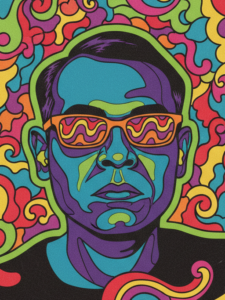
“When I grow up, I want to be just like me.”
I saw that graffiti once. It was scrawled on a peeling concrete wall, tucked behind a row of overgrown ferns. It stopped me. Usually, we talk about growing up as a process of moving away from ourselves—becoming more professional, more productive, more “ready” for a world of spreadsheets and schedules.
But the truth is, adults need the outdoors just as much as kids do. Maybe more.
The Drift of Real Life
Think about the last time you took a long drive. No destination, just the rhythm of the tires on the asphalt and the way the light filters through the trees. Or that moment on a vacation when the Wi-Fi drops out and you’re forced to look at the horizon. You feel a physical shift. The tension in your shoulders, the kind you didn’t even know you were carrying, starts to dissolve.
This isn’t about “recharging” so you can work harder on Monday. It’s about remembering that you are a sensory being. We weren’t built to sit in climate-controlled boxes for 10 hours a day. We were built for movement, for the smell of damp earth, and for the “unexpected discovery” of a mountain road.
Why We Play
When kids go outside, they don’t have a “goal.” They aren’t tracking their steps or optimizing their heart rate. They are just there. As adults, we’ve lost that. We’ve replaced curiosity with “performance.” We go to the gym to “fix” ourselves, but we go to nature to find ourselves.
We, adults too need to be ready. For example, being “ready” means having the agility to jump over a puddle or the lung capacity to laugh until it hurts. We tend to reward hardwork and chores with playtime. Play isn’t a reward for finishing your chores; it is the practice of being alive.
The Miyazaki Perspective
Hayao Miyazaki, the master storyteller, understood this balance. Unlike the endless loops of modern series designed to keep you glued to a screen, Miyazaki created movies—singular, hour-long journeys. He famously said he wanted children to watch a story, feel the wonder of the world, and then—crucially—turn off the TV and go outside to play. He didn’t want to capture their attention; he wanted to spark their curiosity and then release them back into the real world.
We should treat our lives the same way. Use the tools, do the practice, but then step out. Whether it’s a CompassDrift Journey or just a walk to the end of the street, the goal is the same: to get back to the person who wrote that graffiti.
Stay curious.
When was the last time you followed a path without checking the map first?